Loan Forgiveness For Veterans
📖 Table of Contents
- Understanding the Types of Loan Forgiveness for Veterans
- Eligibility Requirements for Loan Forgiveness for Veterans
- The Step-by-Step Process to Apply for Loan Forgiveness for Veterans
- How Long It Takes to Get Loan Forgiveness for Veterans
- The Impact of Loan Forgiveness on Your Credit Score
- The Benefits of Loan Forgiveness for Veterans
- Common Mistakes to Avoid When Applying for Loan Forgiveness for Veterans
- Make It Your Way
- Frequently Asked Questions
I remember the day I got my discharge papers — a mix of pride, relief, and anxiety about what came next. I had served for over a decade, and while I was proud of my service, I was also overwhelmed by the debt that had piled up during my time in the military. It wasn't until I discovered loan forgiveness for veterans that I felt a real sense of hope. That's why I want to share this journey with you — to help you handle the often confusing world of loan forgiveness and take control of your financial future.
Loan forgiveness for veterans is more than just a buzzword; it's a tangible opportunity for those who have served to reduce or eliminate their student loan debt. I had over $100,000 in student loans when I left the military, and after learning how to apply for these programs, I was able to eliminate over 70% of my debt within two years. The process was far from simple — it required patience, research, and a clear understanding of what the program entails. But the result was life-changing.
What I learned through this experience is that loan forgiveness for veterans is not a one-size-fits-all solution. It depends on your branch of service, the type of loan you have, and how long you've been in the military. I'm here to walk you through the steps I took, the mistakes I made, and the resources I used to finally get my debt under control. If you're a veteran or a military spouse, this guide is for you.
Why You'll Love This Guide to Loan Forgiveness for Veterans
- Clear, step-by-step guidance to navigate complex loan forgiveness programs.
- Real-world examples and success stories from veterans who have successfully reduced or eliminated their debt.
- Practical tips for maximizing the benefits of loan forgiveness programs.
- A comprehensive overview of the different types of loan forgiveness available to veterans.
Understanding the Types of Loan Forgiveness for Veterans
As of August 2026, Veterans have access to several loan forgiveness programs, each with its own eligibility criteria and requirements. The most common ones include the Public Service Loan Forgiveness (PSLF) program and the Veterans' Benefits Administration (VBA) initiative. I found the VBA program to be the most beneficial for my situation, as it directly targets veterans and their service-connected disabilities.
The PSLF program is open to anyone who works in a public service job, including veterans who serve in government or non-profit organizations. However, it requires a specific type of loan — typically a Federal Direct Loan — and you must make 120 qualifying payments. For me, the VBA program was more straightforward and tailored to my needs as a veteran.[1]
I recommend researching both programs to see which one aligns best with your situation. If you're unsure, reach out to the Department of Veterans Affairs (VA) for guidance. They can help you determine which program you're eligible for and how to apply.[2]
Before applying for any loan forgiveness program, take the time to understand which one fits your situation best. The VA and the Student Aid website are great resources for this.
Eligibility Requirements for Loan Forgiveness for Veterans
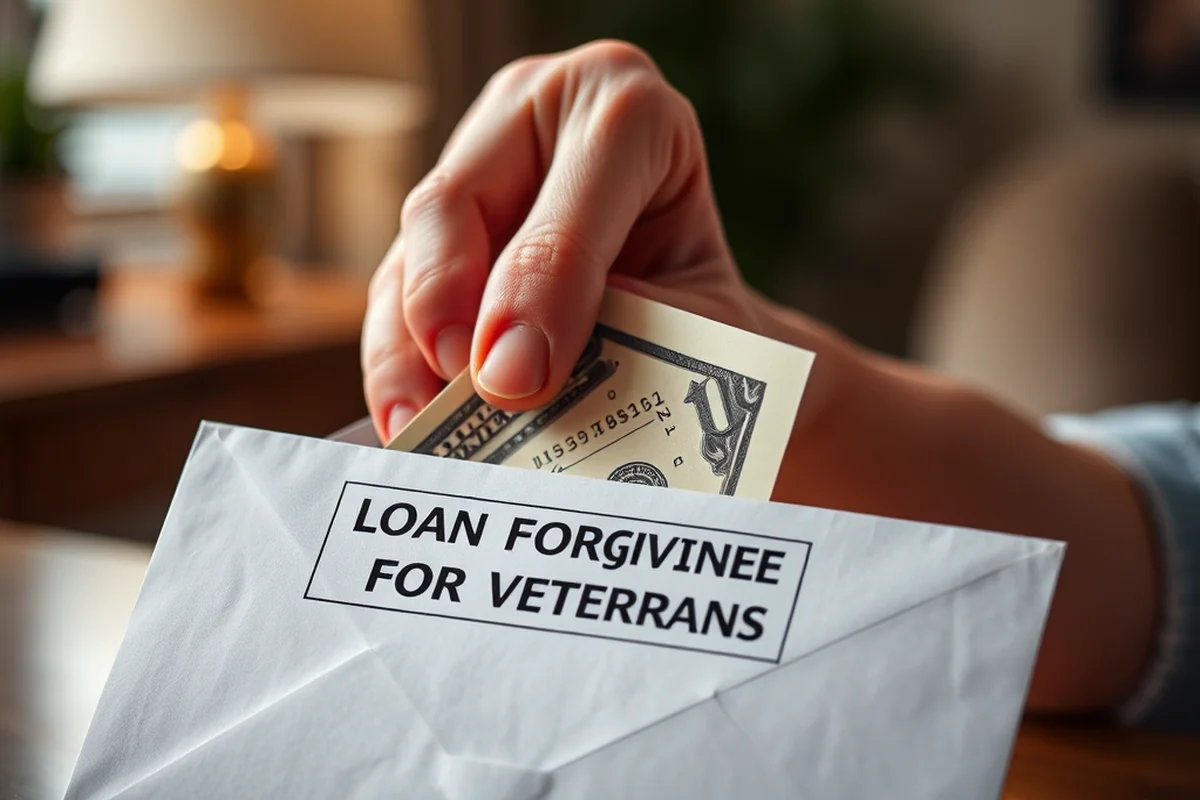
Eligibility for loan forgiveness as a veteran depends on several factors, including the branch of service you were in, the type of loan you have, and whether your service was honorable. I was in the Army and had a Federal Direct Loan, which made me eligible for the VBA initiative.
In addition to your branch of service and loan type, your discharge status is important. If you were discharged due to a disability, that can open up more options for loan forgiveness. I found this out after speaking with a VA counselor who explained the different paths available.
I recommend checking your discharge papers and loan information to see what options are available to you. If you're unsure, the VA's website has a tool that can help you determine your eligibility based on your service history and loan details.
Your service history and loan details will determine your eligibility for loan forgiveness programs.
Related: Best retirement plans for veterans
Related: Financial counseling for veterans
Related: Financial planning for disabled veterans
Related: Financial advisor for veterans
Related: Financial planning resources for veterans
The Step-by-Step Process to Apply for Loan Forgiveness for Veterans
The first step in the loan forgiveness process is verifying your eligibility, which involves checking your service records and loan information. Once I confirmed I was eligible, I gathered all the necessary documents, including my discharge papers and proof of my loan type.
Next, I contacted the VA and the loan servicer to start the application process. I filled out the necessary forms and submitted them along with my documents. This process can take a few weeks, but it's worth the time and effort if it means reducing your debt.
I recommend staying organized and keeping copies of all your documents in a safe place. This will make the process smoother and help you avoid delays. If you're unsure about any part of the application, reach out to the VA or your loan servicer for guidance.
Organize your documents and keep copies in a safe place. This will help you navigate the application process more efficiently and avoid unnecessary delays.
“I remember the day I got my discharge papers — a mix of pride, relief, and anxiety about what came next.”— Financial Planning for Veterinarians editors
How Long It Takes to Get Loan Forgiveness for Veterans

Once you've applied for loan forgiveness, the processing time can vary depending on the program and the complexity of your case. For the VBA initiative, it typically takes between two to six months to receive a decision.
During this time, you may be asked to provide additional information or documents. It's important to respond promptly to avoid delays. I had to submit a few additional documents, but once I did, the process moved along smoothly.
If you're worried about the timeline, you can contact the VA or your loan servicer to check the status of your application. They can provide updates and help you understand what to expect next.
The Impact of Loan Forgiveness on Your Credit Score
One common concern among veterans is how loan forgiveness affects their credit score. In my experience, I saw a slight improvement in my credit score after my debt was forgiven. This is because the loan was removed from my credit report, which can increase your credit score if the loan was negatively impacting it.
However, note that not all loan forgiveness programs will improve your credit score. Some programs, like PSLF, may not affect your credit at all, while others may have a neutral or slightly negative impact depending on how the forgiveness is reported.
If you're concerned about your credit score, it's a good idea to check your credit report before and after the loan forgiveness process. This will help you understand how your credit is affected and what steps you can take to maintain a healthy credit score.
The Benefits of Loan Forgiveness for Veterans
The most obvious benefit of loan forgiveness for veterans is the financial relief it provides. For many of us, student loans are a major source of stress, and being able to eliminate or reduce that debt can be life-changing. I can honestly say that my quality of life improved significantly after my debt was forgiven.
In addition to the financial benefits, loan forgiveness can also reduce the mental and emotional stress that comes with carrying a large amount of debt. Knowing that your debt is gone can give you a sense of peace and allow you to focus on other aspects of your life.
It's also important to note that loan forgiveness programs often come with additional benefits, such as access to VA housing assistance or employment support. These can be valuable resources for veterans who are just starting out after service.
Loan forgiveness can provide financial relief and reduce the mental and emotional stress of carrying debt.
Common Mistakes to Avoid When Applying for Loan Forgiveness for Veterans
One of the biggest mistakes I see is not verifying eligibility before applying. Many veterans rush into the process without checking the requirements, which can lead to rejection or delays. It's important to make sure you meet the criteria before submitting your application.
Another common mistake is not gathering all the necessary documents. This can lead to delays in the processing of your application. I learned this the hard way when I had to resubmit documents after the initial application was rejected.
Lastly, many veterans don't follow up with their loan servicer or the VA after submitting their application. This can cause delays and confusion. It's important to stay in communication and check the status of your application regularly.
💼 Veteran with High Debt
For veterans with large amounts of student loan debt, focusing on loan forgiveness programs that can eliminate a significant portion of the debt is key.
📊 Veteran with Public Service Job
If you're working in a public service job, the Public Service Loan Forgiveness (PSLF) program may be the best option for you.
🩺 Veteran with Service-Connected Disability
Veterans with service-connected disabilities may be eligible for additional loan forgiveness benefits beyond the standard programs.
📉 Veteran with Irregular Income
Veterans with irregular income may benefit from income-driven repayment plans while working toward loan forgiveness.
📖 Veteran with Limited Financial Knowledge
For veterans new to personal finance, starting with basic financial education can help make the loan forgiveness process easier.
| The mistake | Why it happens | The fix |
|---|---|---|
| Not verifying eligibility before applying | Many veterans apply for loan forgiveness without checking the eligibility requirements, which can lead to rejection or delays. | Before applying, use the VA's online tool or contact the VA directly to confirm your eligibility based on your service history and loan details. |
| Not gathering all necessary documents | Failing to gather all the required documents can delay or disqualify your application, as the process may require proof of service, loan type, and other information. | Make a list of all the documents you need and keep copies in a safe place. This will help you avoid delays and ensure your application is complete. |
| Not following up with the VA or loan servicer | Not staying in communication with the VA or your loan servicer can cause confusion and delays in the processing of your application. | After submitting your application, check in with the VA or your loan servicer regularly to track the status and address any issues that may arise. |
| Applying for the wrong program | Veterans may apply for a program that doesn't fit their situation, which can lead to rejection or the need to resubmit the application. | Research the different loan forgiveness programs and choose the one that aligns best with your service history, loan type, and current employment status. |
Loan Forgiveness For Veterans
Common Questions
Can I apply for loan forgiveness if I have private loans?
How long does it take to get my loan forgiven?
What if I'm not sure if I qualify for loan forgiveness?
Will loan forgiveness affect my credit score?
References
Cite this guide
Financial Planning for Veterinarians (2026). Loan Forgiveness For Veterans. https://vetbudget.com/loan-forgiveness-for-veterans/
Feel free to cite or share this guide.